
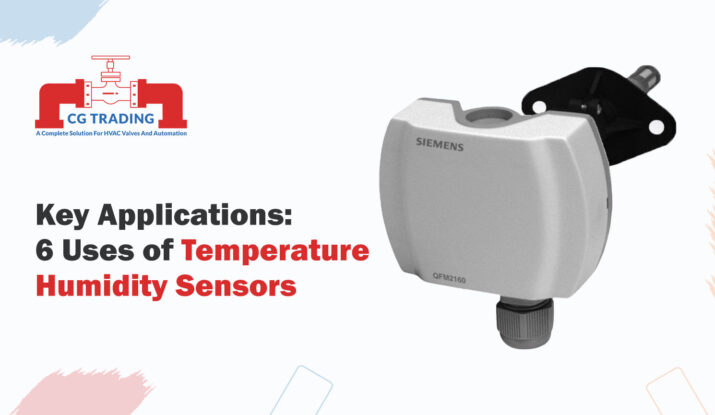
A lot goes into the manufacturing process. Some industries, such as food, pharmaceutical, and chemical, require specific temperatures to ensure precise product quality. The temperature humidity sensors measure temperature and humidity in the surrounding environment. The powerful sensors inserted in the machine absorb the temperature and humidity in the environment and reflect it in their readings. Some of the major applications of temperature humidity sensors are:
- HVAC Systems:
One of the major uses of temperature and humidity sensors is in HVAC systems. These systems maintain the quality of the indoor air, regulating the temperature and the moisture level. In commercial settings, the sensors work by adjusting the heating and cooling based on occupancy, promoting comfort and efficiency. It also reduces the energy consumption, promoting comfort and lower utility rates.
- Agriculture & Greenhousing Monitoring:
The crop’s health depends a lot on the temperature and humidity. The precise temperature will lead to proper yield, enhancing the quality of the output. The equipment helps the farmers monitor the farm. The excess humidity may lead to fungal growth, and the high temperature can create drought-like conditions. When the sensors are connected to the automated irrigation system, the ventilation system will respond according to the real-time temperature, protecting the quality of the crops.
- Industrial Manufacturing Process:
In most industrial environments, especially those involving pharmaceuticals, chemicals, and electronics, need specific temperature regulations. Even a small temperature variation can lead to material degradation, product defects, and equipment malfunction. It helps the company meet regulatory compliance as well as maintain the quality of the product.
- Data Centres:
The servers in the room filled with computers release a lot of heat, and thus, it is vital to have strict environmental control. The excess heat can damage the hardware. On the other hand, humidity can lead to electrostatic discharge or corrosion. The temperature and humidity sensors can monitor the hot spots in racks, trigger the cooling system, and also prevent excessive downtime.
- Smart Devices:
We are living in the age of the internet, where everything is automated and integrated with IoT (Internet of Things). Many of the consumer devices are now integrated with temperature sensors, which enhance the functionality and the user experience. These are included in the smart thermostats, weather stations, home assistants, and wearable health monitors. By integrating these environmental sensors, these devices offer more personalized and responsive features.
- Healthcare Systems:
When dealing with the products of the healthcare system, having a controlled environment is essential, especially for storing the vaccines, medicines, and laboratory samples. Some of the drugs should be kept in a specific tempature and humidity range to remain effective. The sensors in the healthcare industry can be used for storing blood, transporting vehicles containing medicines and refrigerators, and containers in hospitals.
Wrapping Up…
So, these are the top six applications of the temperature humidity sensors. They are a silent hero quietly working behind the scenes in a lot of applications. To ensure the health of the crop to protect sensitive equipment like computers, their role is fundamental in ensuring smooth operations. The technology of the sensors continues to advance, and their usage in industries is just expanding.
So, whether you are running a healthcare system or just want to keep your home comfortable, the ‘CG Trading’ temperature-controlling sensors come in handy. The essential data will help you make smart and efficient decisions. Their high-quality sensors allow precise operations. It provides comfort with fewer efforts at an affordable rate.