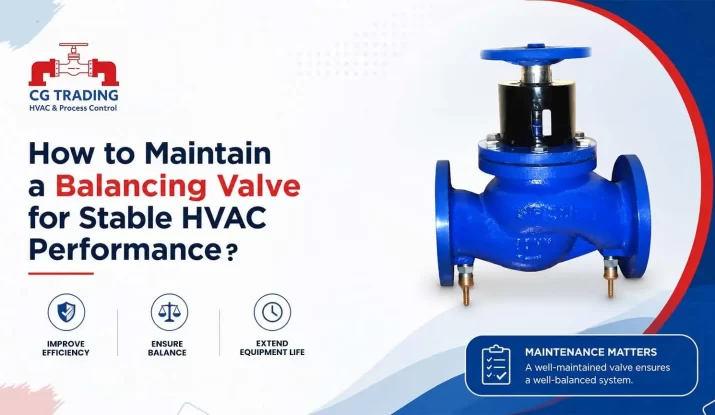
Picking a balancing valve for HVAC work comes down to one thing: how well it holds flow steady on real jobs. If you install a valve that looks fine but can’t handle pressure swings, it drifts, leaks, or stops balancing mid-season. If you don’t check it after installation or during maintenance, you waste energy and get uneven temperatures. The right valve matches the actual work your system needs, not just the price or the specs on the datasheet. In this blog, you will find out what a valve does, where it matters, and how to look after it so your HVAC system stays stable.
Why Flow Control Matters for a Balancing Valve?
Flow control is the most important thing when you work with a valve. It decides if the valve can keep water moving evenly through every branch without fighting the pump. A valve with poor control gives you hot and cold spots, noisy pipes, and uneven heating or cooling that takes multiple adjustments to fix.
A balancing valve with extra features is not always better. It can be heavier, harder to adjust, and cost more than you need. Match your valve to the work it will actually do, not to what the catalog says.
Good flow control means faster startup, even temperatures, less energy waste, and lower operating costs. A valve that holds its setting makes life easier for the maintenance crew and cuts down on service calls.
How to Pick the Right Valve?
First, figure out what work your valve will handle most of the time. It’s not just about pipe size. Think about:
- pressure up to 16 bar for commercial systems
- flow rate for your circuit size (0.5–50 m³/h)
- adjustable opening for fine-tuning during balancing
- lighter valve body for tight spaces
- easy cleanup with water or flushing
Many people make the mistake of only looking at price. That leads to picking a balancing valve that is cheap but can’t handle system pressure, hard water, or temperature swings. Add up all your system needs, then add a little extra for future changes. That gives you the minimum valve specs you need.
If your systems vary (small offices, big warehouses, multi-zone buildings), pick based on the highest pressure and largest flow you usually balance, not the small circuits.
Matching the Valve to Your HVAC System
Once you know what you need, match it to your valve and where it sits in the system. A balancing valve for light residential work is different from one for heavy commercial HVAC on big chillers or boilers.
Think about:
- how many circuits you balance per day
- fluid type (chilled water, hot water, glycol mix)
- work location (plant room, ceiling space, outside)
- power and control (manual valve, automated actuator, BMS connection)
Common Mistakes with Balancing Valves
People make these mistakes often with valves:
- picking low pressure rating that can’t handle system spikes
- not flushing the line before installation, causing debris clogs
- using a valve too small for the flow, wasting pump energy
- ignoring hard water, scale buildup, or long pipe runs
Another mistake is thinking all valve units with the same Kᵥ value work the same. Seat material, stem design, body casting, and sealing quality matter a lot.
How to Get the Best from Your Valve?
To get the most from your valve:
- flush the line before installing the valve
- check and clean the strainer before each balancing session
- look at the valve position for correct opening and note turns
- strain fluid before filling to remove debris
- talk to a supplier who knows HVAC balancing for the right size, pressure, and Kᵥ
Think ahead for future system changes. If your load or circuit size may grow, pick a balancing valve that can handle that without being too large for now.
Balancing Valve on Real HVAC Jobs
Modern HVAC work is about getting consistent flow, not waiting for perfect conditions. Expectations are steady. Energy budgets are tight. More system zones are common. Crews who get good results focus on speed, even flow, and stable temperatures.
Speed Is a Real Benefit
Fast balancing is expected. Even flow is expected. No constant adjustments are expected. When balancing works, crews do not notice. When it fails, time and money are lost. Your valve decides how many circuits you finish per day.
Good balancing valve performance keeps water flowing from pump to pipe to terminal unit without problems. Even small pressure drops cause uneven flow or noise.
Handling Different Systems Matters More Than High Pressure
Most HVAC systems use different circuits. The challenge is finding a balancing valve that handles them all. High flow slows response. When flow is too high, performance drops.
Your valve must handle chilled water, hot water, glycol mix, and high-temperature systems without leaking or drifting. Adjustable opening is needed.
Flow Stability Is Important
Bad flow costs money to fix. Flow affects how things feel, how long equipment lasts, and if the client is happy. Getting it right means fewer service calls and a better reputation.
Check your valve position for a good setting before each season. Clean stems with a soft brush. Replace if the valve sticks or leaks.
Less Waste Saves Money
Waste costs money. It means wasted energy, more pump runtime, and extra costs. A good balancing valve setup with the right size and setting reduces overspeed and waste.
Use the right value for your circuit. Adjust opening for the load. Energy waste is less with proper balancing than with unbalanced systems.
Portability Matters
Moving your tools on the job is normal. Poor access causes problems. Crews expect the same performance everywhere.
Your balancing valve must be easy to install in tight spaces, ceiling voids, and plant rooms. Lighter weight means less strain during installation.
Fixing the Problems
If your system runs but flow is weak, do this:
- Check strainer and intake for clogs
- Find blockages before the valve
- Check pipe and valve body
- Look for leaks, kinks, or worn seats
- Adjust opening
- Increase turns for high flow or large circuit
- Flush thoroughly
- Use right flushing procedure, full pressure flush, then clean water
- Wait for it to settle
- Cleaning and testing take time for changes to work and pressure to stabilize
Working Confidently on the Job
When the balancing valve matches the system, balancing goes smoothly. Crews know the valve is not being overworked. Teams see less strain on pump, pipes, and terminals. Jobs finish with more confidence.
The real value of picking the right valve is not having the biggest valve but having the right valve for the daily HVAC work.
Need reliable valves with good specs and support? CG Trading has valves built for performance and durability. Pick the one that fits your HVAC projects’ actual balancing needs. Visit CG Trading to see options and get help from people who know HVAC systems.
FAQs
Q: Why is flow control important for a balancing valve?
Look at pressure rating (up to 16 bar), flow coefficient Kᵥ (0.5–50 m³/h), adjustable opening, valve body weight, and easy maintenance.
Q: What specs matter when picking a balancing valve?
Match specs to daily circuit count, fluid type, environment, location (plant room, ceiling, outside).
Q: What happens with low balancing valve pressure rating?
Valve leaks. Drifts. Fails. Uneven flow. More service calls.
Q: What happens with the wrong balancing valve size?
The valve is harder to adjust, wastes more energy, costs more to run, and causes flow issues and extra cleanup.