
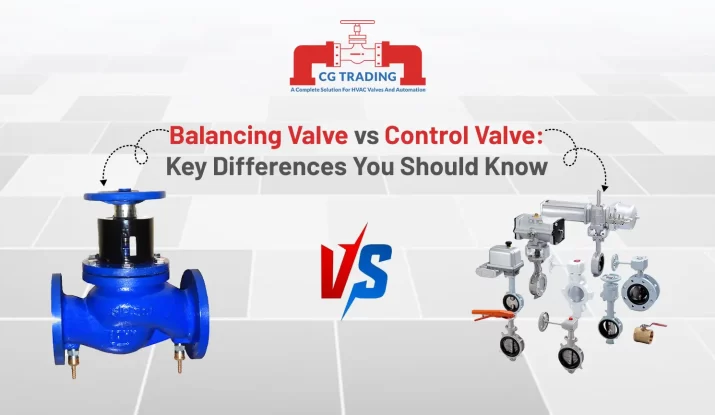
In any heating, cooling, or plumbing system, smooth water flow is very important. If the flow is not balanced or controlled properly, the system can become inefficient, noisy, and costly to run. This is where valves play a key role. Two most popular valves are balancing valve and control valve. Many times, people think both are the same thing. But these two valves do very different jobs. Once you understand that, everything becomes much clearer. This blog explains the differences between both the valves.
What is a Balancing Valve?
A Balancing Valve is used to manage water flow in a system. Its main purpose is to make sure that water is flowing evenly everywhere it should. In large buildings, water always takes the easiest path. Some pipes get more flow, some get less. Because of this, one room might be too cold while another feels warm. This is where a balancing valve helps.
During installation, the technician adjusts the balancing valve to control how much water flows through each section. After that, the valve usually stays in that position. It does not open and close every day.
Key functions of a balancing valve:
- Maintains proper water flow
- Improves system efficiency
- Reduces energy waste
- Ensures uniform heating or cooling
What is a Control Valve?
A Control Valve works in a very different way. Instead of staying fixed, it keeps adjusting itself. This valve changes the flow of water based on temperature, pressure, or system demand. It opens and closes automatically.
For example, in air conditioning systems, control valves open or close depending on the room temperature. If the room is warm, the valve opens more to allow higher flow. If the room cools down, the valve reduces the flow. This helps maintain a comfortable temperature and saves energy.
This valve keeps opening and closing depending on the requirement. If the room temperature changes, the control valve reacts. If the system demand goes up or down, the valve adjusts the flow.
Key functions of a control valve:
- Regulates flow automatically
- Maintains desired temperature or pressure
- Improves comfort and performance
- Saves energy by reducing excess flow
Key Differences Between Balancing Valve and Control Valve
The main difference between a balancing valve and a control valve lies in their function.
A balancing valve is used to set and maintain a fixed flow rate, while a control valve is used to continuously regulate flow based on system needs.
Balancing valves are manually adjusted and stay in one position most of the time. Control valves, on the other hand, work automatically and change their opening throughout the day.
In simple terms, a balancing valve helps balance the system, and a control valve helps control the system.
Conclusion
This was all about how a balancing valve is different from a control valve. Both valves play important roles in HVAC and water systems. Choosing the correct valve directly affects system performance. Proper flow control helps reduce electricity bills, avoids frequent maintenance issues, and improves indoor comfort. If you are looking for high-quality valves, CG Trading is a trusted name in the industry. We make and sell customized and affordable range of valves. We believe in honest service, fair pricing, and proper technical support. Whether your requirement is small or large, our team is always ready to help you choose the right solution for your project.

CG Trading
CG Trading is the leading supplier, trader, exporter, and distributor in the valve industry. We specialize in providing high-quality valves for the HVAC, firefighting, and industrial sectors.